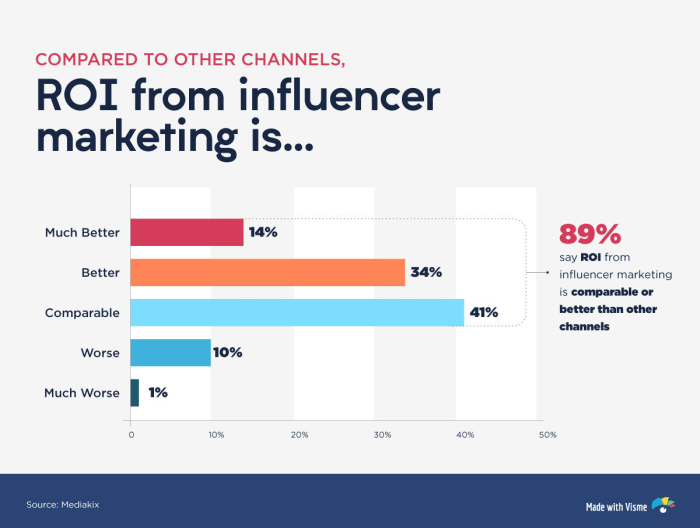
Unlocking the true potential of influencer marketing hinges on understanding and maximizing its return on investment (ROI). This exploration delves into the multifaceted aspects of calculating, strategizing, and optimizing influencer campaigns for measurable success. We’ll examine key performance indicators (KPIs), effective influencer selection methods, and content creation strategies to ensure your campaigns deliver tangible results and a strong return.
From defining ROI and selecting the right influencers to executing compelling campaigns and analyzing performance data, we’ll cover the entire influencer marketing lifecycle. This comprehensive guide provides a practical framework for businesses of all sizes to leverage the power of influencer collaborations to achieve their marketing goals and generate substantial returns.
Defining Influencer Marketing ROI
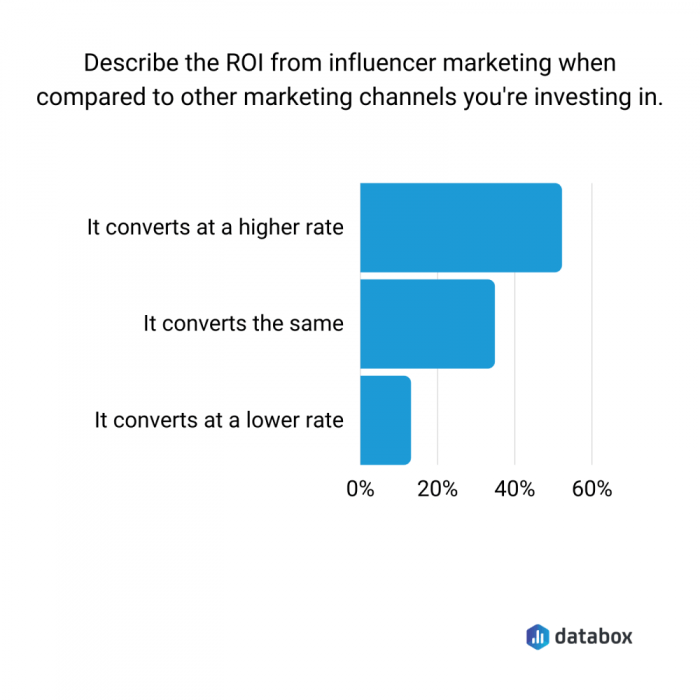
Influencer marketing, while offering significant potential for brand growth, requires careful measurement to justify its investment. Understanding and calculating Influencer Marketing ROI (Return on Investment) is crucial for demonstrating its effectiveness and optimizing future campaigns. This involves a multi-faceted approach that considers various factors beyond simple engagement metrics.Calculating Influencer Marketing ROI necessitates a clear understanding of its constituent components.
It’s not simply about the number of likes or shares; it’s about translating influencer activity into tangible business outcomes. This involves meticulously tracking key performance indicators (KPIs) across the entire campaign lifecycle, from initial planning to post-campaign analysis. A robust attribution model is essential to accurately connect influencer actions with revenue generated.
Components of Calculating Influencer Marketing ROI
Calculating Influencer Marketing ROI involves a comprehensive assessment of both costs and returns. The cost component includes influencer fees, campaign management fees (if applicable), content creation costs, and any platform advertising expenses. The return component is more complex and requires a thorough understanding of the KPIs and a well-defined attribution model. It’s important to establish clear goals before the campaign begins so you can measure success against those specific objectives.
For example, if your goal is increased website traffic, you need to track website visits from the influencer’s campaign. If your goal is increased sales, you need a method for tracking sales generated by the campaign.
Key Performance Indicators (KPIs) for Influencer Marketing Campaigns
Several KPIs are vital for measuring the success of influencer marketing campaigns. These metrics provide insights into the campaign’s effectiveness across different stages. Choosing the right KPIs depends heavily on the campaign’s specific objectives.
- Website Traffic: Tracking website clicks and visits originating from the influencer’s posts allows for a direct measurement of campaign-driven traffic.
- Brand Mentions and Reach: Monitoring the number of brand mentions and the overall reach of the campaign across various platforms provides insights into brand awareness and visibility.
- Engagement Rate: This measures the level of interaction (likes, comments, shares) with the influencer’s posts, reflecting audience engagement and campaign resonance.
- Conversions: Tracking sales, leads, or sign-ups directly attributable to the influencer campaign is a crucial indicator of the campaign’s direct impact on business outcomes. This might involve using unique discount codes or tracking links.
- Customer Acquisition Cost (CAC): Calculating the cost of acquiring a new customer through the influencer campaign provides a cost-effective metric for evaluating ROI.
Methodology for Tracking and Attributing Revenue
Attributing revenue generated from influencer marketing initiatives requires a structured approach. This involves implementing tracking mechanisms that accurately link influencer actions to specific sales or conversions.A robust attribution model is essential. This might involve using unique URLs, discount codes, or promo codes linked to specific influencers and campaigns. This allows for accurate tracking of conversions stemming from each influencer’s contribution.
For example, a unique URL containing a UTM parameter could be included in the influencer’s post, enabling precise tracking of website traffic driven by that specific influencer. Similarly, a unique discount code associated with a specific influencer allows for easy identification of sales resulting from their campaign. Analyzing the data collected through these tracking mechanisms allows for a clear understanding of which influencers and which campaigns are most effective in driving revenue.
This data informs future influencer marketing strategies and resource allocation.
The formula for calculating Influencer Marketing ROI is typically: (Revenue Generated – Campaign Costs) / Campaign Costs. However, the most accurate calculation will depend on the chosen KPIs and attribution model.
Influencer Selection and Campaign Strategy
Successful influencer marketing hinges on a well-defined strategy, beginning with the careful selection of influencers and culminating in a meticulously planned campaign. This involves understanding your target audience, aligning your brand with the right influencers, and setting measurable goals to track progress and return on investment. A strategic approach maximizes impact and ensures your campaign resonates effectively.
A robust framework for influencer selection considers both audience engagement and brand alignment. It’s not just about follower count; genuine engagement and a relevant audience are paramount. The influencer’s content style, values, and overall brand image should seamlessly integrate with your own. A mismatch can lead to a dissonant campaign and ultimately, a poor ROI.
Influencer Selection Framework
A multi-faceted approach to influencer selection is crucial. This framework combines quantitative and qualitative data to identify the most suitable partners. Consider these key aspects:
- Audience Demographics and Interests: Analyze the influencer’s audience to ensure it aligns with your target market. Consider factors like age, location, interests, and online behavior.
- Engagement Rate: A high engagement rate (likes, comments, shares) indicates a highly responsive and engaged audience. Look beyond follower count; a smaller audience with high engagement is often more valuable than a large, passive following.
- Brand Alignment: The influencer’s values, brand personality, and content style should resonate with your brand’s identity and message. Incongruence can damage your brand reputation.
- Content Quality and Authenticity: Assess the quality and authenticity of the influencer’s content. Does it align with your brand’s standards? Is the content genuine and engaging?
- Past Campaign Performance: Review the influencer’s past campaigns to gauge their effectiveness. Look for evidence of successful collaborations and measurable results.
Micro-influencers vs. Macro-influencers: Campaign Strategies
Choosing between micro-influencers (smaller, highly engaged audiences) and macro-influencers (large audiences, potentially lower engagement) depends on your campaign goals and budget. Each approach offers distinct advantages and disadvantages.
| Feature | Micro-influencers | Macro-influencers |
|---|---|---|
| Reach | Smaller, highly targeted audience | Vast audience, broader reach |
| Cost | Generally lower | Significantly higher |
| Engagement | Typically higher engagement rates | Potentially lower engagement rates |
| Authenticity | Often perceived as more authentic | May be perceived as less authentic due to potential for sponsored content |
Setting Clear Goals and Objectives
Before launching any influencer marketing campaign, clearly defined goals and objectives are essential. These goals should be Specific, Measurable, Achievable, Relevant, and Time-bound (SMART). Without clearly defined goals, measuring ROI and assessing campaign success becomes challenging.
- Example: Increase brand awareness among 18-25 year olds by 20% within three months, as measured by website traffic and social media mentions.
Comparison of Influencer Marketing Platforms
Different platforms offer varying levels of reach, cost, and engagement metrics. Choosing the right platform is crucial for maximizing campaign effectiveness.
| Platform | Reach | Cost | Engagement Metrics |
|---|---|---|---|
| High, visually focused | Varies greatly depending on influencer | Likes, comments, shares, saves, stories views | |
| TikTok | High, younger demographic | Varies greatly depending on influencer | Likes, comments, shares, views, engagement time |
| YouTube | High, diverse audience | Varies greatly depending on influencer and video length | Views, likes, comments, shares, watch time |
| Moderate, real-time conversations | Varies greatly depending on influencer | Retweets, likes, replies, mentions |
Content Creation and Campaign Execution
Effective influencer marketing hinges on crafting compelling content and executing seamless campaigns. This involves a thoughtful approach to content development, proactive influencer management, and diligent performance tracking. A well-structured process ensures authenticity, maximizes engagement, and ultimately drives a strong return on investment.Successful influencer marketing campaigns require a strategic blend of creativity and data-driven decision-making. This section Artikels the key steps involved in creating engaging content, managing influencer relationships, and optimizing campaign performance for optimal results.
Developing Engaging and Authentic Influencer Content
Creating authentic and engaging content requires understanding your target audience and the influencer’s unique style. The content should align seamlessly with both the brand’s message and the influencer’s established persona to avoid appearing forced or inauthentic. This process typically involves collaborative brainstorming sessions between the brand and the influencer, ensuring that the final product reflects a shared vision and resonates with the target demographic.
Consider incorporating user-generated content (UGC) to foster a sense of community and build trust. For example, a fitness brand might collaborate with a fitness influencer to create a short video showcasing a new workout routine, using UGC clips submitted by the influencer’s followers to demonstrate real-world application.
Managing Influencer Relationships and Collaborations
Effective influencer marketing requires more than just selecting the right individuals; it demands careful cultivation of relationships. A structured approach to managing these collaborations is crucial for success.
- Pre-Campaign Communication: Clearly define campaign goals, deliverables, and expectations in a detailed brief. This ensures both parties are on the same page regarding content style, tone, and deadlines.
- Content Approval Process: Establish a clear review process for all influencer-generated content to maintain brand consistency and ensure alignment with campaign objectives. This may involve multiple rounds of feedback and revisions.
- Ongoing Communication: Maintain regular communication throughout the campaign to address any questions or concerns, provide updates, and foster a collaborative environment. This can be achieved through email, messaging apps, or regular check-in calls.
- Post-Campaign Feedback: Provide constructive feedback to the influencer after the campaign concludes. This demonstrates appreciation for their contribution and provides valuable insights for future collaborations.
Tracking Campaign Performance and Making Adjustments
Real-time monitoring of campaign performance is essential for optimizing results. By closely tracking key metrics, brands can identify areas for improvement and make necessary adjustments mid-campaign.
- Key Performance Indicators (KPIs): Track relevant metrics such as reach, engagement (likes, comments, shares), website traffic, conversions (sales, sign-ups), and brand mentions. Different KPIs will be prioritized depending on the campaign objectives.
- Real-time Monitoring Tools: Utilize social media analytics dashboards and influencer marketing platforms to track performance in real-time. These tools provide valuable insights into audience demographics, content performance, and overall campaign effectiveness.
- Data-Driven Adjustments: Based on the data gathered, make necessary adjustments to the campaign strategy. This may involve optimizing content, adjusting targeting parameters, or increasing investment in high-performing influencers.
Measuring and Analyzing Results
Understanding the effectiveness of your influencer marketing campaigns requires a robust measurement strategy. Simply tracking follower count isn’t enough; a deeper dive into key metrics provides actionable insights for optimization and improved ROI. This section details effective metrics, illustrative reports, and best practices for data-driven campaign improvements.Effective metrics for evaluating influencer marketing ROI go beyond simple vanity metrics like follower counts and likes.
Instead, focus on metrics that directly correlate with your business objectives. This allows for a more precise understanding of the campaign’s impact and facilitates data-driven decision-making for future campaigns.
Key Performance Indicators (KPIs) for Influencer Marketing
Several KPIs provide a comprehensive view of campaign success. These metrics should be aligned with your overarching marketing goals, whether that’s increasing brand awareness, driving website traffic, or boosting sales. Choosing the right KPIs ensures you’re measuring what truly matters.
- Website Traffic and Engagement: Track referral traffic from influencer posts to your website. Analyze metrics like click-through rates (CTR) from links shared by influencers, time spent on your site, and pages visited. This data reveals the effectiveness of influencers in driving qualified traffic.
- Brand Mentions and Reach: Monitor the number of times your brand is mentioned across various platforms, including social media and blogs. Analyze the reach of these mentions – how many people saw the posts featuring your brand? This indicates the extent of brand awareness generated by the campaign.
- Social Media Engagement: Go beyond likes and comments. Examine metrics such as shares, saves, and the overall sentiment expressed in comments. High engagement suggests a positive brand perception and strong influencer-audience connection.
- Sales Conversions: Track sales directly attributable to influencer campaigns. This might involve using unique discount codes or tracking affiliate links. This is the most direct measure of ROI.
- Customer Acquisition Cost (CAC): Calculate the cost of acquiring a new customer through the influencer marketing campaign. Compare this to your overall CAC to assess the efficiency of this marketing channel.
Example Reports Showcasing Influencer Marketing Impact
Data visualization is crucial for effectively communicating the impact of influencer marketing. Reports should be clear, concise, and tailored to the specific KPIs you’ve chosen to track. Report 1: Brand Awareness Report This report would present data on brand mentions, reach, and social media engagement. It might include a chart showing the increase in brand mentions over the campaign period, alongside a map illustrating the geographic reach of the campaign.
For instance, a graph could display a 30% increase in brand mentions on Instagram after a month-long campaign. Report 2: Website Traffic and Sales Report This report would focus on website traffic driven by influencer marketing, highlighting the number of visitors, conversion rates, and ultimately, sales generated. A table could compare the website traffic from organic sources versus traffic originating from influencer posts. For example, a comparison might show a 20% increase in website sales attributed directly to influencer campaign links.
Optimizing Influencer Marketing Campaigns Based on Data Analysis
Analyzing the data from your campaigns is not just about reporting; it’s about using the insights to improve future efforts. Regularly reviewing your KPIs allows for continuous optimization and maximizing your ROI.
- Identify Top-Performing Influencers: Analyze which influencers generated the highest engagement, website traffic, and sales. Prioritize these influencers in future campaigns.
- Refine Content Strategy: Examine the type of content that resonated most with the audience. Use this data to inform your future content strategy and create more effective campaigns.
- Adjust Budget Allocation: Based on performance data, adjust your budget allocation to prioritize high-performing influencers and content formats.
- A/B Test Different Approaches: Experiment with different influencer types, content formats, and campaign durations to determine what works best for your brand.
- Continuously Monitor and Adapt: Influencer marketing is dynamic. Regularly monitor your campaigns and make adjustments based on real-time data to optimize performance.
Influencer Marketing within the Broader Digital Marketing Landscape
Influencer marketing, while a powerful tool in its own right, thrives when integrated seamlessly with other digital marketing strategies. Its effectiveness is amplified when it’s not treated as a standalone tactic, but rather as a crucial component of a holistic digital marketing approach. Understanding its interplay with other channels is key to maximizing its return on investment.Influencer marketing isn’t a replacement for other digital strategies; it’s a powerful complement.
A well-executed campaign leverages the strengths of various channels to achieve broader reach and deeper engagement. This synergistic approach creates a more impactful and cohesive brand experience for the target audience.
Integration with Other Digital Marketing Strategies
Influencer marketing synergistically works with other digital marketing strategies, boosting overall campaign effectiveness. For example, influencer posts can be optimized for search engines () by incorporating relevant s and linking back to the brand website. This enhances organic search visibility and drives traffic. Simultaneously, influencer content can be repurposed and shared across various social media platforms, extending its reach and impact.
Furthermore, email marketing can nurture leads generated through influencer campaigns, fostering long-term customer relationships. A carefully planned campaign will often involve using an influencer’s audience to build an email list, creating a valuable asset for future marketing efforts.
Comparative ROI of Influencer Marketing and Other Digital Channels
Directly comparing the ROI of influencer marketing to other digital channels is challenging due to the variability of campaign designs and measurement methods. However, studies suggest that influencer marketing often delivers a higher return than traditional advertising, particularly in terms of engagement and brand awareness. While pay-per-click (PPC) advertising offers immediate, measurable results, influencer marketing fosters longer-term brand loyalty and organic reach.
Email marketing, while cost-effective, typically has a lower engagement rate compared to influencer marketing, especially for reaching new audiences. The ROI ultimately depends on careful planning, selecting the right influencers, and effectively tracking key metrics. For instance, a well-executed influencer campaign focusing on a niche audience might yield a significantly higher conversion rate than a broad-based social media advertising campaign.
The Role of Influencer Marketing in Building Brand Loyalty and Driving Customer Acquisition
Influencer marketing plays a significant role in both building brand loyalty and driving customer acquisition. Authentic endorsements from trusted influencers build credibility and trust, fostering stronger customer relationships. Influencers often have highly engaged audiences who are receptive to their recommendations, leading to increased brand awareness and conversions. This is particularly effective for customer acquisition, as influencer marketing can reach potential customers who might not otherwise be exposed to the brand.
Moreover, user-generated content (UGC) stemming from influencer collaborations adds a layer of authenticity, strengthening brand perception and fostering loyalty among existing customers. This two-pronged approach – attracting new customers and retaining existing ones – is crucial for long-term business success.
Key Differences Between Influencer Marketing and Traditional Advertising
The effectiveness of influencer marketing compared to traditional advertising hinges on the level of authenticity and engagement. Before outlining the differences, it’s crucial to understand that the goal is not to replace one with the other, but rather to strategically combine them.
- Authenticity vs. Manufactured Image: Influencer marketing leverages authentic endorsements, while traditional advertising often relies on carefully crafted, sometimes unrealistic, portrayals.
- Engagement vs. Reach: Influencer marketing prioritizes engagement with a targeted audience, while traditional advertising focuses on broad reach, often resulting in lower engagement rates.
- Trust vs. Suspicion: Consumers often trust influencer recommendations more than traditional advertisements, as influencers are perceived as relatable and genuine.
- Measurability vs. Qualitative Impact: While traditional advertising metrics are easily quantifiable (impressions, reach), influencer marketing ROI can be harder to pinpoint directly but often results in qualitative impacts like increased brand loyalty and trust.
- Cost-Effectiveness vs. Budget Requirements: While large-scale traditional advertising campaigns require substantial budgets, influencer marketing offers scalable options, allowing businesses of all sizes to participate.
Case Studies and Best Practices
Successful influencer marketing hinges on strategic planning and meticulous execution. Understanding what works, what doesn’t, and learning from both successes and failures is crucial for maximizing ROI. This section will delve into specific case studies illustrating effective strategies and highlighting common pitfalls to avoid.Effective influencer marketing campaigns aren’t simply about choosing popular influencers; they’re about aligning brand values with influencer authenticity and creating engaging content that resonates with the target audience.
By examining successful campaigns, we can glean valuable insights into building impactful strategies.
Successful Influencer Marketing Campaigns
Several brands have leveraged influencer marketing exceptionally well. For example, Daniel Wellington, a watch brand, successfully utilized micro-influencers on Instagram to build brand awareness and drive sales. Their strategy focused on high-quality product photography and authentic user-generated content, fostering a sense of community around the brand. Another example is Glossier, a beauty brand, which built its entire marketing strategy around user-generated content and collaborations with beauty bloggers and influencers who genuinely aligned with their brand values.
This authentic approach resonated deeply with their target demographic, resulting in significant brand loyalty and sales growth. These campaigns demonstrate the power of strategic influencer selection and authentic content creation.
Impactful Visual Content Examples
Visuals are paramount in influencer marketing. A well-designed infographic, for instance, can effectively communicate complex information about a product or service in a concise and engaging manner. Imagine an infographic illustrating the key benefits of a new skincare product, using vibrant colors and clear icons to highlight each point. Each benefit could be represented by a distinct section with a short, descriptive caption.
The overall design should be clean and aesthetically pleasing, maintaining brand consistency. Another impactful visual is a short, animated explainer video demonstrating how a product works. This video could feature a friendly animated character guiding viewers through the process, using humor and engaging visuals to keep their attention. The use of bright colors, smooth animation, and a clear narrative makes the information easily digestible and memorable.
Such visuals significantly increase engagement and brand recall.
Common Mistakes to Avoid in Influencer Marketing
Failing to properly define campaign goals and key performance indicators (KPIs) is a frequent mistake. Without clear objectives, it’s difficult to measure success or make data-driven decisions. Another common error is selecting influencers solely based on follower count, neglecting factors such as audience engagement, relevance, and authenticity. This can lead to low conversion rates and wasted resources.
Furthermore, neglecting to track and analyze campaign results is detrimental. Without data-driven insights, it’s impossible to understand what worked, what didn’t, and how to optimize future campaigns. Finally, not establishing clear guidelines and communication channels with influencers can lead to inconsistencies in messaging and brand representation. A well-defined brief outlining campaign goals, target audience, and brand guidelines is essential for a successful collaboration.
Ultimately, mastering influencer marketing ROI requires a strategic, data-driven approach. By carefully selecting influencers, crafting engaging content, and meticulously tracking key metrics, businesses can transform influencer collaborations from a cost into a powerful engine for growth. This guide provides the essential tools and knowledge to navigate this dynamic landscape and reap the rewards of effective influencer marketing.
Popular Questions
How do I determine the right budget for an influencer marketing campaign?
Budgeting depends on your goals, target audience, and chosen influencers. Start by defining your KPIs and desired reach, then research influencer rates and package options to find a suitable fit within your overall marketing budget.
What are some common mistakes to avoid when working with influencers?
Avoid unclear contracts, failing to set clear goals, neglecting audience alignment, and not monitoring campaign performance. Also, be wary of fake followers and engagement.
How can I track the long-term impact of influencer marketing?
Track brand awareness through surveys and social listening, monitor website traffic and conversions attributed to influencer campaigns, and analyze customer lifetime value influenced by these collaborations. Consider using UTM parameters for precise tracking.
How often should I evaluate and adjust my influencer marketing strategy?
Regular evaluation is crucial. Monitor key metrics weekly or bi-weekly to identify trends and areas for improvement. Adjust your strategy based on data analysis, campaign performance, and market changes.