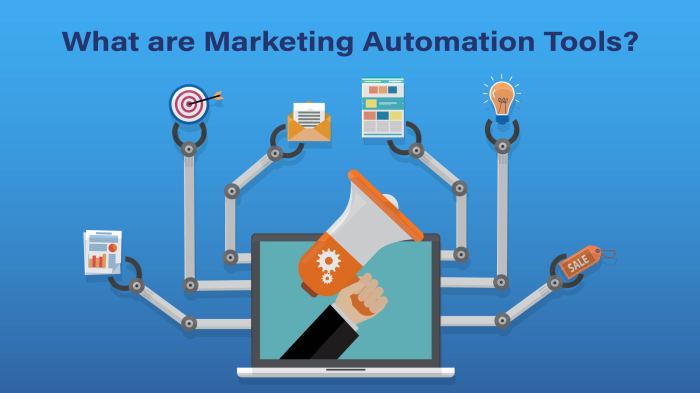
The marketing landscape is constantly evolving, and 2024 promises to be no different. This guide delves into the crucial role of marketing automation tools in navigating this dynamic environment. We’ll explore the top contenders, emerging trends like the increasing influence of AI, and the importance of data privacy. We’ll also examine successful integration strategies across various digital channels and provide actionable insights into measuring ROI and overcoming common implementation challenges.
From understanding key performance indicators to predicting the future of the field, this comprehensive overview equips marketers with the knowledge and strategies needed to leverage automation effectively and achieve significant results. We’ll cover everything from choosing the right tool for your needs to optimizing campaigns for maximum impact, ensuring you’re well-prepared for the future of marketing.
Top Marketing Automation Tools in 2024
Marketing automation tools are crucial for businesses of all sizes seeking to streamline their marketing efforts, improve efficiency, and ultimately, boost ROI. The right tool can significantly enhance lead generation, nurture prospects, and personalize customer interactions, leading to increased conversions and stronger customer relationships. Choosing the best platform depends heavily on specific business needs and budget constraints.
Top 10 Marketing Automation Tools and Their Unique Selling Propositions
Selecting the optimal marketing automation platform requires careful consideration of several factors. The following table compares ten leading tools, highlighting their key features, pricing models, and target audiences. Note that pricing can vary based on specific features and user volume.
| Name | Key Features | Pricing Model | Target Audience |
|---|---|---|---|
| HubSpot | CRM integration, email marketing, landing pages, social media management, analytics dashboards. Strong emphasis on inbound marketing. | Freemium, tiered pricing | Small to enterprise businesses, particularly those focused on inbound marketing strategies. |
| Marketo | Advanced lead scoring and segmentation, account-based marketing (ABM) capabilities, robust analytics and reporting. Known for its sophistication. | Subscription-based, enterprise-level pricing | Large enterprises with complex marketing needs and dedicated marketing teams. |
| Salesforce Marketing Cloud | Highly scalable platform with advanced features for email marketing, personalization, journey building, and cross-channel campaign management. Deep Salesforce ecosystem integration. | Subscription-based, enterprise-level pricing | Large enterprises with significant marketing budgets and complex marketing operations. |
| ActiveCampaign | Powerful automation features, excellent email marketing capabilities, robust CRM integration, and advanced segmentation. Known for its ease of use. | Subscription-based, tiered pricing | Small to medium-sized businesses, particularly those prioritizing email marketing and automation. |
| Pardot (Salesforce) | B2B focused platform with strong lead scoring, engagement tracking, and sales alignment capabilities. Seamless integration with Salesforce. | Subscription-based, enterprise-level pricing | B2B businesses seeking to improve lead nurturing and sales conversion rates. |
| SharpSpring | Marketing automation, CRM, and website analytics all in one platform. Strong focus on ROI tracking and reporting. | Subscription-based, tiered pricing | Small to medium-sized businesses seeking a comprehensive marketing platform. |
| Drip | E-commerce focused platform with strong email marketing, segmentation, and automation features. Excellent for personalized customer journeys. | Subscription-based, tiered pricing | E-commerce businesses seeking to improve customer retention and lifetime value. |
| Ontraport | All-in-one marketing platform with CRM, email marketing, membership sites, and e-commerce capabilities. Highly customizable. | Subscription-based, tiered pricing | Businesses needing a comprehensive, customizable platform. |
| Zoho CRM + Marketing Automation | Integrated CRM and marketing automation platform. Offers a wide range of features at a competitive price. | Subscription-based, tiered pricing | Small to medium-sized businesses seeking an affordable, integrated solution. |
| GetResponse | Email marketing, landing pages, webinars, automation, and sales funnels. User-friendly interface. | Subscription-based, tiered pricing | Small to medium-sized businesses looking for a comprehensive email marketing and automation solution. |
Successful Marketing Campaigns Using Marketing Automation Tools
Many successful campaigns leverage marketing automation. For example, a B2B SaaS company using Marketo implemented an account-based marketing strategy, focusing on high-value prospects. This resulted in a 30% increase in qualified leads and a 20% improvement in sales conversion rates within six months. Another example involves an e-commerce company utilizing Drip to personalize email sequences based on customer purchase history and website behavior.
This led to a 15% increase in customer lifetime value and a significant reduction in churn rate. These successes highlight the power of strategic marketing automation implementation.
Emerging Trends in Marketing Automation
The marketing automation landscape is constantly evolving, driven by technological advancements and changing consumer behavior. Understanding emerging trends is crucial for businesses seeking to leverage these tools effectively and maintain a competitive edge. This section will explore three key trends shaping the future of marketing automation.
Artificial Intelligence’s Expanding Role in Marketing Automation
Artificial intelligence (AI) is rapidly transforming marketing automation, moving beyond simple automation to deliver truly intelligent solutions. AI-powered tools are enhancing personalization, prediction, and optimization across the entire customer journey. For example, AI algorithms analyze vast datasets to identify patterns and predict customer behavior, enabling marketers to proactively deliver targeted content and offers. Predictive analytics, driven by AI, allows for more effective campaign segmentation and resource allocation, resulting in improved ROI.
Furthermore, AI-powered chatbots are revolutionizing customer service, providing instant support and personalized assistance, leading to increased customer satisfaction and engagement. The use of AI in A/B testing allows for rapid optimization of marketing campaigns, identifying the most effective messaging and creative assets, ultimately boosting conversion rates. Companies like Netflix utilize AI-powered recommendation engines to suggest content tailored to individual user preferences, demonstrating the powerful impact of AI on customer engagement and retention.
The Growing Importance of Data Privacy and Compliance
Data privacy regulations, such as GDPR and CCPA, are significantly influencing the development and use of marketing automation tools. Marketers must prioritize data security and transparency to maintain customer trust and avoid hefty penalties. This has led to a focus on tools that offer robust data management capabilities, including features like consent management platforms, data anonymization techniques, and secure data storage solutions.
Companies are investing heavily in compliance measures, ensuring their marketing automation practices adhere to evolving regulations. For example, many platforms now offer features that allow users to easily manage subscriber preferences and provide clear opt-out options, demonstrating a commitment to data privacy. This trend is not just about compliance; it’s about building a positive brand reputation and fostering long-term customer relationships based on trust and respect for their data.
Hyper-Personalization and Omnichannel Experiences
The demand for personalized customer experiences is increasing, and marketing automation tools are evolving to meet this need. Hyper-personalization goes beyond simple segmentation; it leverages AI and data analysis to deliver highly tailored content and offers based on individual customer preferences, behaviors, and interactions across multiple channels. Omnichannel marketing, integrating various touchpoints such as email, social media, SMS, and in-app messaging, is crucial for delivering seamless and consistent experiences.
Effective marketing automation tools enable marketers to orchestrate campaigns across these channels, ensuring a cohesive and personalized journey for each customer. For instance, a customer might receive a personalized email based on their browsing history, followed by a targeted social media ad, and finally a relevant in-app notification, all contributing to a consistent and engaging brand experience. This level of personalization significantly enhances customer engagement and loyalty, driving improved conversion rates and brand advocacy.
Integration with Other Digital Marketing Channels

Marketing automation tools are not standalone entities; their true power lies in their ability to seamlessly integrate with other digital marketing channels, creating a cohesive and efficient marketing ecosystem. This integration allows for streamlined workflows, improved data analysis, and ultimately, a better return on investment (ROI). Effective integration optimizes campaign performance across various platforms, enhancing the overall customer experience.Marketing automation platforms achieve this integration through various methods, including APIs (Application Programming Interfaces), pre-built connectors, and custom integrations.
These methods allow data to flow between different systems, automating tasks and providing a unified view of customer interactions. This holistic approach enables marketers to orchestrate targeted campaigns across email, social media, and search engines, creating a more impactful and personalized customer journey.
Email Marketing Integration
A key integration point for marketing automation is with email marketing services. This synergy allows for highly targeted and personalized email campaigns triggered by specific user actions or events within the automation platform. For example, a user downloading a whitepaper could automatically trigger a follow-up email sequence nurturing their interest and guiding them towards a conversion. This integration streamlines email campaign creation and management, improving efficiency and campaign performance.
Workflow Example: Marketing Automation and Email Marketing Integration
Consider a lead nurturing campaign using HubSpot (marketing automation platform) and Mailchimp (email marketing service). The workflow could be as follows:
1. Lead Capture
A website visitor fills out a form on a landing page, capturing their name and email address. This information is automatically passed to HubSpot.
2. Segmentation
HubSpot segments the lead based on pre-defined criteria (e.g., industry, job title).
3. Email Trigger
Based on the segmentation, HubSpot triggers a specific email sequence in Mailchimp.
4. Automated Emails
Mailchimp sends a series of automated emails, providing valuable content and guiding the lead through the sales funnel.
5. Data Synchronization
Mailchimp updates HubSpot with engagement data (e.g., open rates, click-through rates), allowing for further segmentation and campaign optimization.
6. Reporting and Analysis
HubSpot provides comprehensive reporting on the entire campaign performance, combining both marketing automation and email marketing data.This integrated approach provides a clear picture of campaign effectiveness and allows for data-driven adjustments to optimize future campaigns.
Social Media Engagement Improvement through Marketing Automation
Marketing automation can significantly enhance social media engagement by automating repetitive tasks and providing data-driven insights. This automation allows for more efficient content scheduling, targeted advertising, and personalized interactions. For instance, a company can automatically post content across multiple platforms, schedule social media posts based on optimal times, and monitor engagement metrics in real time.
Step-by-Step Guide: Using Marketing Automation to Improve Social Media Engagement
1. Define Goals
Clearly define your social media goals, such as increasing brand awareness, driving website traffic, or generating leads.
2. Audience Segmentation
Segment your audience based on demographics, interests, and behavior to tailor your messaging effectively.
3. Content Planning
Create a content calendar that aligns with your goals and audience segments. This includes planning the type of content, posting frequency, and platform selection.
4. Automation Setup
Use a marketing automation platform to schedule posts across different social media channels. This ensures consistent and timely content delivery.
5. Social Listening
Monitor social media mentions of your brand and engage with users appropriately. The platform can help identify trending topics and relevant conversations.
6. Campaign Tracking
Track key metrics such as engagement rate, reach, and website traffic to measure the success of your social media campaigns.
7. Optimization
Analyze the data to refine your strategy, improve content, and optimize your social media efforts for better engagement.
Search Engine Optimization () Integration
While not as directly integrated as email marketing, marketing automation platforms can indirectly support efforts. By tracking website activity and user behavior, these platforms can provide valuable insights into which content resonates most with your audience. This information can be used to inform content creation and optimization strategies, leading to improved search engine rankings. For instance, identifying popular blog posts or highly engaging social media content can guide the development of optimized website pages and strategies.
Measuring the ROI of Marketing Automation
Marketing automation offers significant potential for boosting efficiency and return on investment (ROI), but accurately measuring its impact is crucial for demonstrating its value and justifying continued investment. Without proper tracking and analysis, it’s difficult to understand what’s working, what’s not, and how to optimize your strategies for better results. This section Artikels key performance indicators (KPIs) to track, provides illustrative dashboard examples, and offers best practices for campaign optimization based on data analysis.Effective measurement of marketing automation ROI requires a strategic approach.
It’s not simply about looking at individual campaign metrics in isolation; it’s about connecting those metrics to broader business goals, such as lead generation, sales conversion, and customer lifetime value. A holistic view allows for a more complete understanding of the overall impact of your automation efforts.
Key Performance Indicators (KPIs) for Marketing Automation
Understanding which metrics to track is fundamental to measuring the success of your marketing automation strategy. Focusing on the right KPIs provides clear insights into campaign performance and areas for improvement. The selection of KPIs should align with your overall marketing objectives.
- Website Conversion Rate: This metric tracks the percentage of website visitors who complete a desired action, such as filling out a form, making a purchase, or signing up for a newsletter. A higher conversion rate indicates effective lead generation and engagement. For example, a campaign that increases website conversion rate from 2% to 5% demonstrates a significant improvement in lead generation.
- Marketing Qualified Leads (MQLs): This KPI measures the number of leads generated through marketing efforts who meet pre-defined qualification criteria, indicating their potential to become customers. Tracking MQLs helps assess the effectiveness of lead nurturing and segmentation strategies. A consistent increase in MQLs suggests a successful lead generation process.
- Sales Qualified Leads (SQLs): This metric represents the number of MQLs that sales teams deem ready for direct engagement. Tracking SQLs highlights the effectiveness of your lead nurturing process in converting MQLs into sales-ready leads. An increase in SQLs, alongside a healthy conversion rate from MQL to SQL, points to a successful lead nurturing strategy.
- Customer Acquisition Cost (CAC): This KPI measures the total cost of acquiring a new customer. By tracking CAC, you can evaluate the efficiency and cost-effectiveness of your marketing automation efforts. A decrease in CAC suggests improvements in campaign efficiency and targeting.
- Return on Ad Spend (ROAS): This metric calculates the revenue generated for every dollar spent on advertising. By integrating marketing automation with advertising platforms, you can track the effectiveness of your paid campaigns and optimize spending for better returns. A ROAS consistently above 1 indicates a profitable advertising strategy.
Dashboard Examples
Visualizing your KPIs through dashboards provides a clear and concise overview of your marketing automation performance. A well-designed dashboard should present key metrics in an easily digestible format, allowing for quick identification of trends and areas for improvement.For instance, a dashboard could display the website conversion rate, MQLs, SQLs, and CAC in a graphical format, showing trends over time.
Another section could highlight the performance of individual campaigns, allowing for a comparison of their effectiveness. A third section could show the ROAS for different advertising channels, facilitating informed budget allocation decisions. This visual representation facilitates quicker decision-making and proactive campaign adjustments.
Best Practices for Optimizing Marketing Automation Campaigns
Analyzing performance data is crucial for ongoing campaign optimization. Regularly reviewing your KPIs and identifying trends allows for data-driven adjustments to improve campaign effectiveness.
Continuously analyze your data, adapt your strategies, and iterate based on the results. Success in marketing automation is an ongoing process of refinement.
By identifying underperforming campaigns or segments, you can refine your targeting, messaging, and automation workflows to improve results. A/B testing different approaches allows you to identify what resonates best with your audience and optimize your campaigns for maximum impact. Regularly reviewing and updating your marketing automation strategy based on data analysis ensures that your efforts remain efficient and effective.
The Role of Marketing Automation in Digital Marketing
Marketing automation has become an indispensable component of a successful digital marketing strategy in today’s fast-paced, data-driven environment. It allows businesses to streamline repetitive tasks, personalize customer interactions, and ultimately achieve a higher return on investment (ROI) from their marketing efforts. Without it, businesses risk being overwhelmed by the sheer volume of data and tasks associated with modern digital marketing, potentially leading to missed opportunities and inefficient resource allocation.Marketing automation fundamentally shifts the focus from manual, time-consuming processes to automated, data-driven campaigns.
This allows marketing teams to concentrate on higher-level strategic initiatives, such as developing innovative campaigns and analyzing performance data to refine strategies. By automating routine tasks, marketing automation frees up valuable time and resources, enabling marketers to focus on creative problem-solving and building stronger customer relationships.
Marketing Automation versus Manual Marketing Processes
Manual marketing processes, while potentially offering a sense of direct control, are often inefficient and prone to human error. They are significantly more time-consuming, requiring manual data entry, email sending, and campaign tracking. This can lead to delays in response times, inconsistent messaging, and a lack of personalized customer experiences. In contrast, marketing automation offers a centralized platform to manage all aspects of marketing campaigns, from lead generation and nurturing to email marketing and social media engagement.
This automation leads to increased efficiency, improved accuracy, and the ability to scale marketing efforts effectively to reach larger audiences with personalized messages. For example, a small business managing email marketing manually might only send out a few hundred emails a week, while a similar business using marketing automation could send thousands of personalized emails, segmented by customer behavior and preferences, all within the same timeframe.
This increased reach and personalization translates directly into improved conversion rates and revenue generation.
Marketing Automation and Improved Customer Relationship Management (CRM)
Marketing automation significantly enhances CRM by enabling more effective customer segmentation, personalized communication, and targeted campaigns. By integrating marketing automation with a CRM system, businesses gain a holistic view of their customer journey, allowing them to track interactions, analyze behavior, and personalize their messaging accordingly. This integration allows for the automation of tasks such as lead scoring, which assigns values to leads based on their engagement and potential, allowing sales teams to prioritize high-value prospects.
Further, it facilitates the creation of highly targeted email sequences, nurturing leads through the sales funnel with personalized content based on their individual needs and interests. For instance, a company selling software could use marketing automation to send tailored email sequences to different customer segments based on their industry, company size, or stage in the buying process. This targeted approach increases engagement and conversion rates, fostering stronger customer relationships and ultimately driving business growth.
Challenges and Considerations
Implementing marketing automation tools, while offering significant potential for growth, presents several challenges that businesses must proactively address for successful adoption and ROI. These hurdles often stem from issues with data management, user adoption, and the ongoing need for training and support. Overcoming these challenges requires a strategic and phased approach, focusing on clear objectives and measurable outcomes.Successful implementation hinges on effective data management and user buy-in.
Poor data quality, insufficient integration with existing systems, and a lack of user training can significantly hinder the effectiveness of any marketing automation platform. Conversely, a well-planned strategy addressing these areas can lead to substantial improvements in efficiency and marketing performance.
Data Management Challenges and Solutions
Effective data management is paramount to the success of any marketing automation initiative. Poor data quality, including inconsistencies, inaccuracies, and incomplete information, can lead to flawed segmentation, inefficient campaigns, and ultimately, a poor return on investment. Strategies for overcoming these challenges include investing in data cleansing and validation tools, establishing robust data governance processes, and ensuring data integration across different marketing platforms.
For example, regularly scheduled data audits can identify and correct inaccuracies, while implementing a single customer view (SCV) can provide a unified and consistent view of customer data across all systems. This allows for more targeted and personalized marketing efforts. Furthermore, using data enrichment tools can supplement existing data with additional information, improving the accuracy and completeness of customer profiles.
User Adoption Strategies
Successfully integrating marketing automation tools requires more than just technical implementation; it necessitates user adoption across the organization. Resistance to change, lack of training, and insufficient support can significantly impede the effectiveness of the new system. Strategies to improve user adoption include providing comprehensive training programs tailored to different roles and responsibilities, establishing clear roles and responsibilities within the marketing team, and fostering a culture of continuous improvement and feedback.
Regular training sessions, coupled with readily available documentation and ongoing support, can help users overcome initial challenges and become confident in using the platform. Furthermore, showcasing early success stories and highlighting the benefits of the system through internal communications can foster enthusiasm and engagement. For example, a phased rollout of the system, starting with a pilot group, can allow for iterative improvements and address user feedback before a full-scale implementation.
The Importance of Ongoing Training and Support
Marketing automation tools are constantly evolving, with new features and functionalities being added regularly. Therefore, ongoing training and support are crucial for maintaining user proficiency and maximizing the return on investment. This should include regular updates on new features, best practices, and troubleshooting tips. Dedicated support channels, such as online forums, help desks, or dedicated support staff, can provide users with prompt assistance when they encounter issues.
Furthermore, providing access to advanced training materials and certification programs can help users develop their skills and expertise in using the platform effectively. Regularly scheduled training sessions and workshops can ensure that users remain up-to-date with the latest features and best practices. This ongoing investment in training and support ensures that the marketing automation system remains a valuable asset to the organization, contributing to improved efficiency and better marketing outcomes.
Future of Marketing Automation
The next five years promise a dramatic reshaping of marketing automation, driven by advancements in artificial intelligence (AI), machine learning (ML), and the ever-increasing sophistication of customer expectations. We’ll see a shift from rule-based automation to more intelligent, adaptive systems capable of anticipating customer needs and personalizing experiences at an unprecedented scale. This will necessitate a deeper understanding of ethical considerations and a renewed focus on data privacy and transparency.The integration of AI and ML will be pivotal.
Predictive analytics will move beyond simple segmentation, allowing marketers to anticipate individual customer behavior with greater accuracy. This will enable hyper-personalization, delivering the right message, at the right time, through the right channel, for each individual customer. For example, an e-commerce platform might predict a customer’s likelihood of abandoning their cart and proactively offer a personalized discount or free shipping to incentivize purchase completion.
A Hypothetical Marketing Automation System in 2029
Imagine a marketing automation system in 2029 that seamlessly integrates with every touchpoint of the customer journey. This system isn’t just reactive; it’s proactive and predictive. Its core is a sophisticated AI engine that analyzes vast amounts of data – transactional data, social media interactions, web browsing history, even sensor data from connected devices – to create a holistic, real-time profile of each customer.
This profile isn’t static; it continuously updates based on new interactions. The system then uses this information to personalize marketing campaigns across multiple channels – email, SMS, social media, in-app messaging, and even personalized website experiences. Visually, imagine a dynamic dashboard displaying a network of interconnected nodes, each representing a customer. The size and color of the nodes change in real-time, reflecting the customer’s engagement level and predicted behavior.
Lines connecting the nodes represent various touchpoints and interactions, dynamically shifting as the customer engages with the brand. The dashboard provides a bird’s-eye view of the entire marketing ecosystem, allowing marketers to identify trends, anticipate challenges, and optimize campaigns in real-time. Think of it as a living, breathing representation of the customer journey, constantly adapting and learning.
Ethical Considerations in Advanced Marketing Automation
The increasing sophistication of marketing automation technologies raises crucial ethical questions. The ability to predict customer behavior with such accuracy raises concerns about manipulation and the potential for exploitation. For instance, the use of highly targeted advertising based on sensitive personal data (health information, financial status) could be perceived as intrusive or even discriminatory. Transparency is paramount.
Customers must be aware of how their data is being used and have the ability to opt out of personalized marketing efforts. Robust data privacy measures and adherence to regulations like GDPR and CCPA are non-negotiable. Furthermore, the potential for algorithmic bias needs careful consideration. If the AI systems are trained on biased data, they may perpetuate and even amplify existing inequalities.
Regular audits and ongoing efforts to mitigate bias are essential to ensure fairness and equity. The development and deployment of responsible AI in marketing automation will require a collaborative effort between technology developers, marketers, and policymakers.
In conclusion, mastering marketing automation in 2024 requires a strategic approach that balances technological advancements with ethical considerations and a deep understanding of your target audience. By carefully selecting the right tools, integrating them seamlessly across your digital channels, and continuously monitoring key performance indicators, businesses can unlock the full potential of automation, driving efficiency, enhancing customer relationships, and ultimately achieving a significant return on investment.
The future of marketing is automated, and this guide provides the roadmap to success.
FAQ Compilation
What is the average cost of marketing automation tools?
Pricing varies greatly depending on the features, scalability, and vendor. Expect a range from free options with limited functionality to enterprise-level solutions costing thousands of dollars per month.
How long does it typically take to implement a marketing automation system?
Implementation timelines depend on the complexity of your needs and the chosen platform. Simple integrations might take weeks, while more complex setups can take months.
What are the biggest risks associated with marketing automation?
Key risks include poor data management leading to inaccurate targeting, insufficient user training resulting in low adoption rates, and potential compliance issues related to data privacy regulations.
Can small businesses benefit from marketing automation?
Absolutely! Many platforms offer affordable plans suitable for small businesses, enabling them to automate repetitive tasks, personalize communications, and improve efficiency despite limited resources.